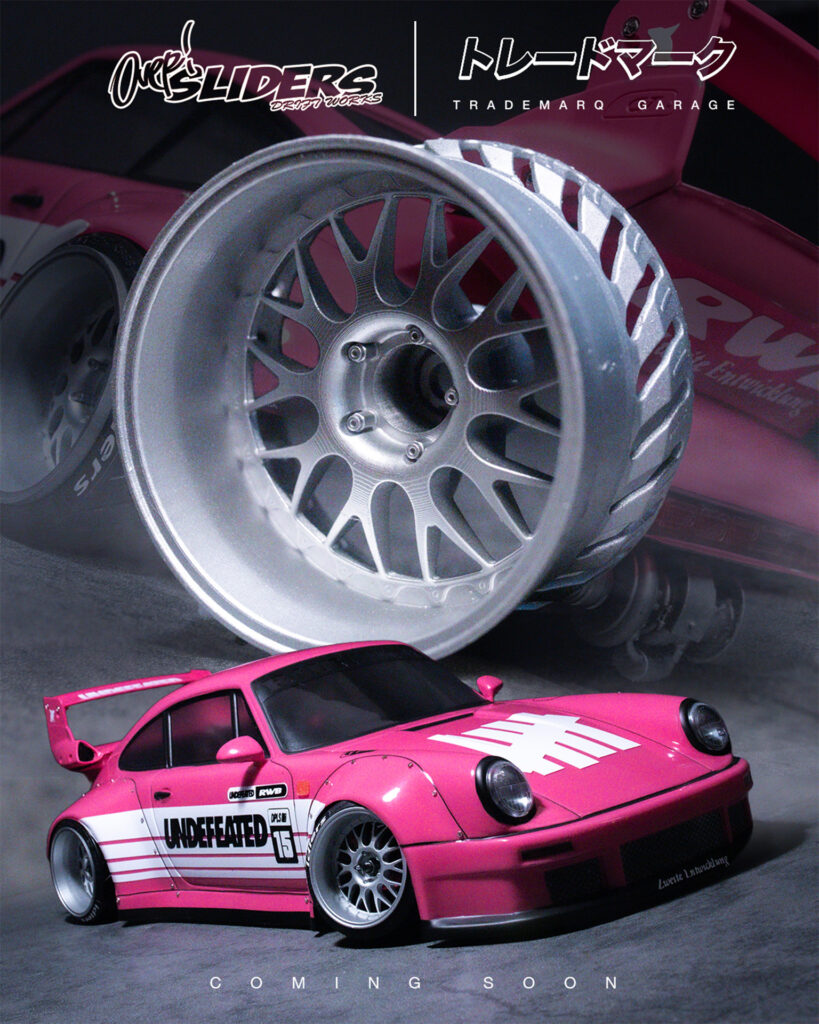
Roughyl a month ago, I was approached by a returning customer to design a high traction variant of one of my wheels, the BBS E88.
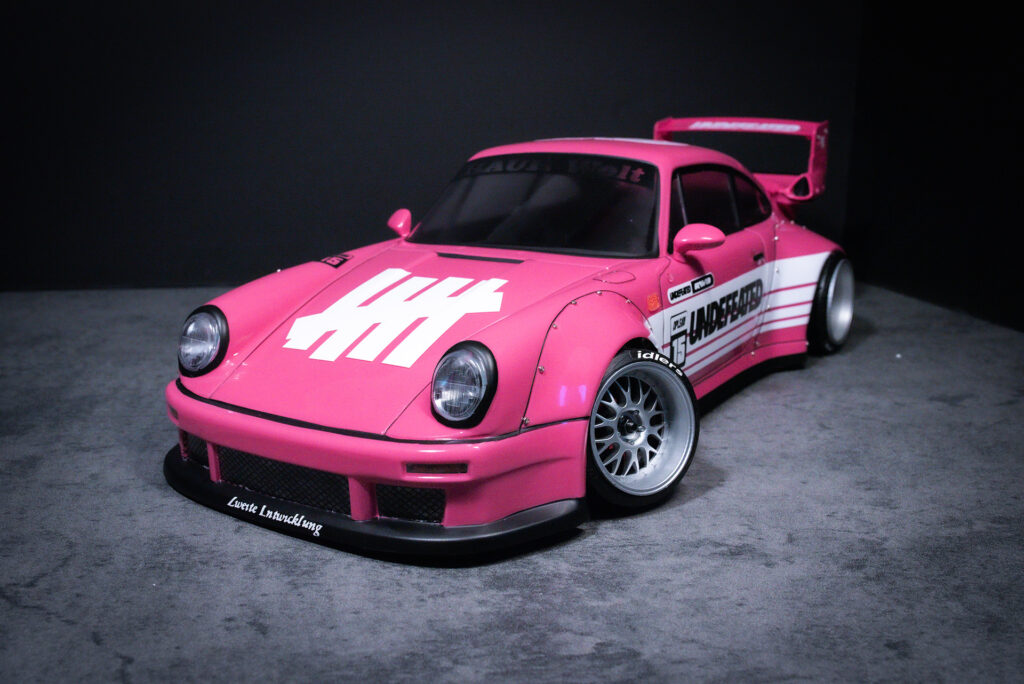
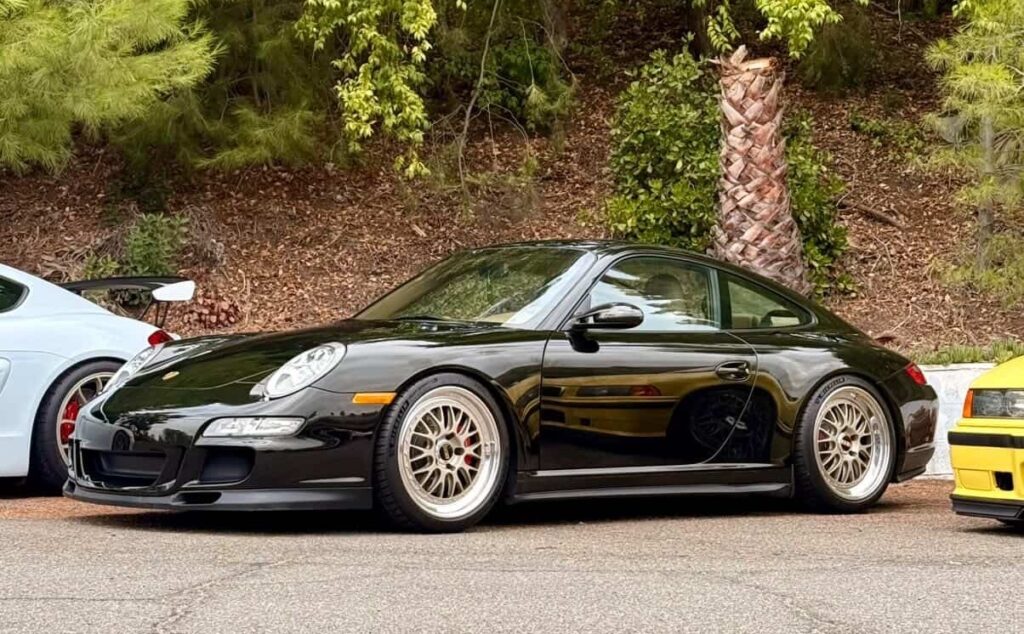
Marc was in the process of finishing up one of the cleanest RWD style Porsche body I had seen in a long time and needed the shoes to fit. He’s a long time Porsche enthusiast and owns the 1:1 E88 on his personal 911 as well, so I obliged.
Now with that said, high traction wheels have already been explored by the big brands such as Yokomo, Reve’d, and Topline to name a few. So I started tinkering on how I could innovate on an already established concept and adapt this to the existing BBS’ E88 wheel’s.
That’s when my inner voice kicked in and thought “Can a high traction wheel have an adaptive behavior?”
What I meant by this was, can a high traction wheel behave differently under different driving conditions such as acceleration and deceleration.
The theory was rather simple: design the cutouts that usually make the wheel “high traction” in a directional way so that they can respond to the wheel rotation direction, inertia, and load.
After a few hours in Solidworks, the concept was alive in its digital form.
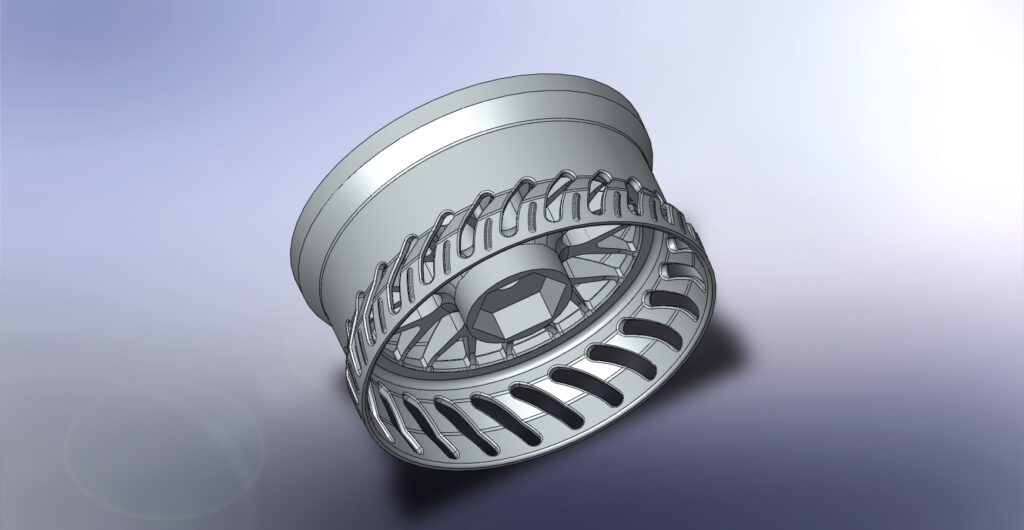
So what does it do exactly?
In theory, the directional cuts allow for the wheel to compress or stiffen under accel or decel, thus allowing you to have a wheel with two characteristics into one. Obviously this is all theoretical but in layman’s terms, or I should rather say “in fancy excel diagram”, this is what my logic tells me.
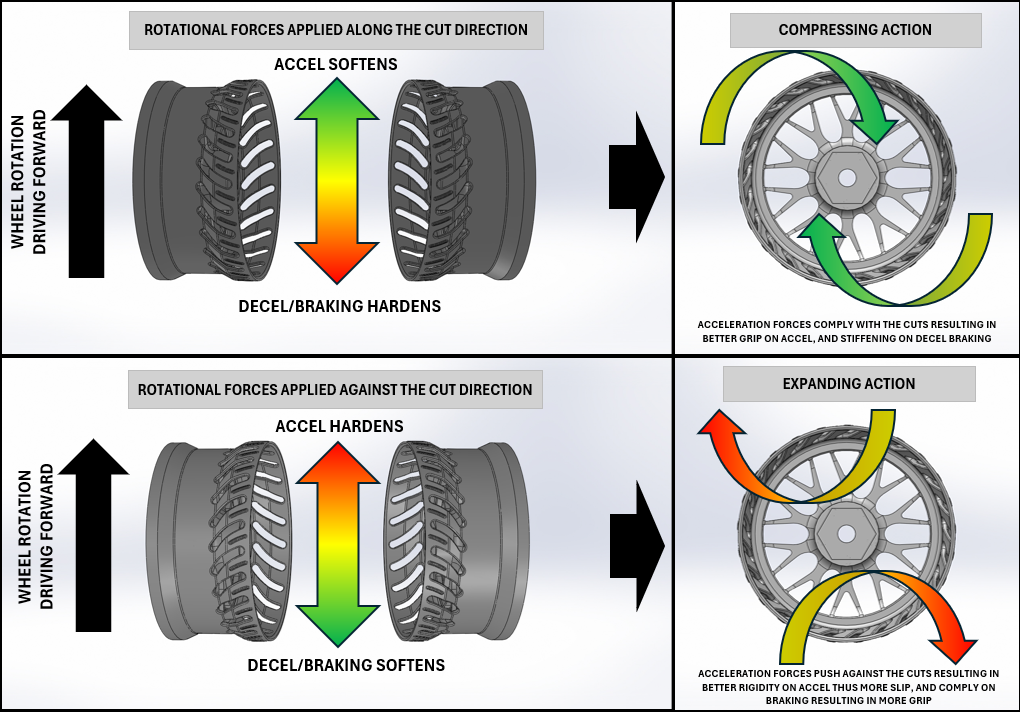
Marc and I verified this theory while he recently took them for a spin at the Super-G TougeMeister friendly competition held over the weekend and the results were really good. He used them on an Overdose GALM with the motor in the RR position. The wheel combo was standard 26mm wheel upfront, and a 30mm wide high traction E88 in the rear with a massive 16mm offset.
Everyone that has driven an RR chassis knows they have a tendency to hang at shallow angles and transition usually slower than an MR or even FR chassis. However, this was not the case at all during this event. The chassis had snappy transitions, picked great speed out of tight turns, and altogether was competitive amongst the plethora of RDX’s and chassis alike.
Here were Marc’s words taken from his latest Instagram post:
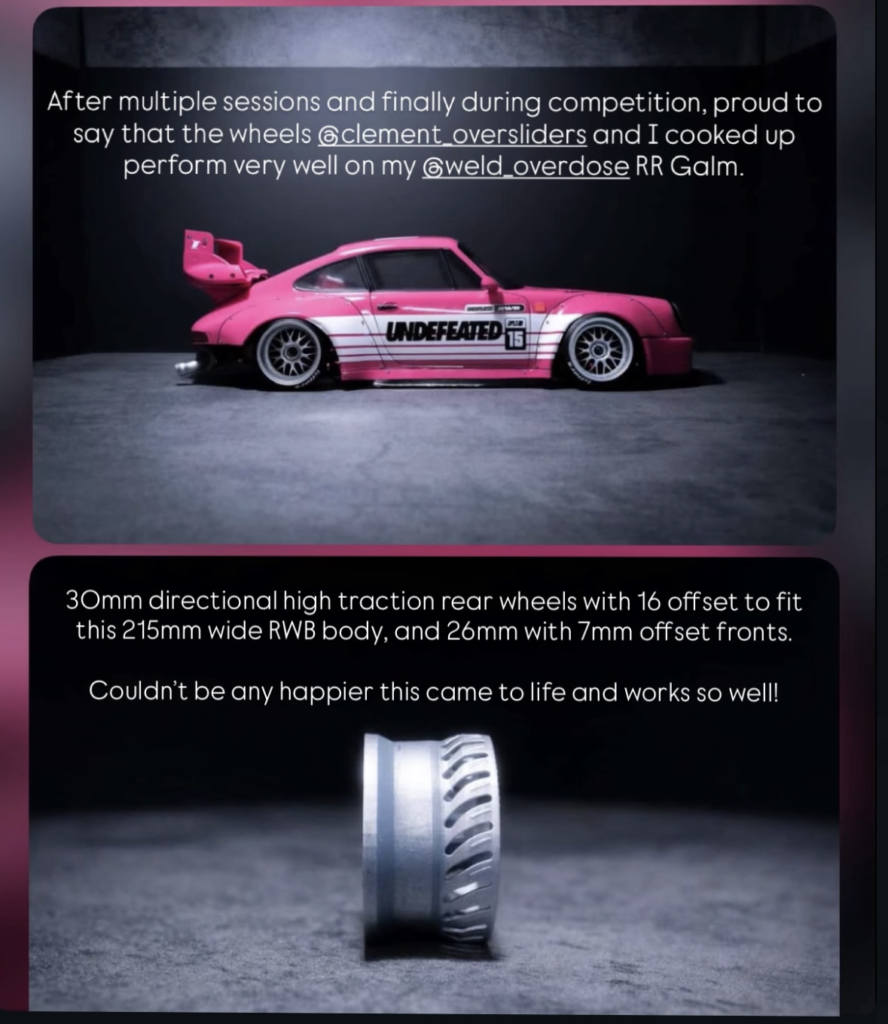
This was a very exciting project, and I am happy I was able to help Marc get the edge he was after. I am also glad he was able to place an RR chassis close to the podium considering today’s chassis are expertly designed and can be real weapons.
As I continue to design wheels and other items, I will investigate potential candidate designs to be converted, as time allows it of course.
If you reached the bottom of this post, thank you for taking the time to read, and thank you for your continuous support.
Oversliders OUT!